Articles by "Politics News"

Britain's Theresa May announced her resignation as prime minister on Friday morning, drawing her turbulent three-year premiership to an abrupt end.

She will step down as Conservative Party leader on June 7.

In an emotional speech outside 10 Downing Street, May said she had "done everything" she could to convince members of Parliament to back the Brexit withdrawal agreement she had negotiated with the European Union. But, she said it was with "deep regret" that she had ultimately failed to reach a consensus among lawmakers.

"I believe it was right to persevere even when the odds against success seemed high, but it is now clear to me that it is in the best interests of the country for a new prime minister to lead that effort," May said at a hastily arranged press conference.

"I will shortly leave the job that it has been the honor of my life to hold. The second female prime minister but certainly not the last."

"I do so with no ill will but with enormous and enduring gratitude to have had the opportunity to serve the country I love," May said, her voice shaking.

Sterling briefly rose 0.5% to climb above $1.27 shortly after May's statement, before paring gains as investors digested the news.

What happens next?

After May steps down as Conservative Party leader, she will continue as an acting prime minister until a new leader is in place.

It means May will still be in Downing Street for the state visit of President Donald Trump from June 3.

On three occasions, U.K. lawmakers have refused to vote in favor of May's much-maligned deal to leave the European Union, leading to open challenges to her premiership from within her own party.

The U.K. leader had already promised to set a timetable for a new prime minister to take the reins, once lawmakers had voted on her new Brexit "Withdrawal Agreement Bill."

But her proposals, including a customs union arrangement and the chance for lawmakers to vote on holding another Brexit referendum, prompted anger from many Conservative MPs.

The opposition Labour Party called May's latest Withdrawal Agreement Bill a "rehash" and said it would not support the plans.

"Theresa May is right to resign. She's now accepted what the country's known for months: she can't govern, and nor can her divided and disintegrating party," Labour leader Jeremy Corbyn said via Twitter on Friday.

"Whoever becomes the new Tory leader must let the people decide our country's future, through an immediate General Election," Corbyn said.

With no Brexit withdrawal agreement, the prospect of the U.K. suffering a disorderly exit from the European Union now appears to be more likely. Britain and Northern Ireland's official departure date from the European Union is Oct. 31.

The process of selecting May's replacement will now begin with Conservative lawmaker and former Foreign Secretary Boris Johnson heavily tipped as her probable successor.

How did we get here?

The referendum to leave the EU was approved on June 23, 2016. A day later, Prime Minister David Cameron, who opposed Brexit, announced his resignation, effective that July. May succeeded him, becoming the U.K.'s second female leader, after Margaret Thatcher, and vowing to carry through Britain's exit.

She initially began the official process of withdrawing the U.K. from the European Union by triggering Article 50 in March 2017.

The following month, May announced a snap general election with the aim of strengthening her hand in Brexit negotiations. That move backfired as the number of Conservative Party MPs actually lost, forcing her government to operate on a confidence and supply deal, securing votes from the Democratic Unionist Party of Northern Ireland.

The biggest difficulty May faced when trying to carry through Britain's exit from the EU was settling the Irish border issue — a contentious problem which remains unresolved.

Ultimately, her plan to exit the European Union failed to satisfy lawmakers from across the political spectrum and put in place a sequence of events that has seen her step down.

The daughter of a vicar, May attended Oxford University where she read Geography.

The 62-year-old May was first elected as an MP in 1997 and rose to become home secretary before taking the top job of prime minister. Previously, May had worked at the Bank of England.


Read More
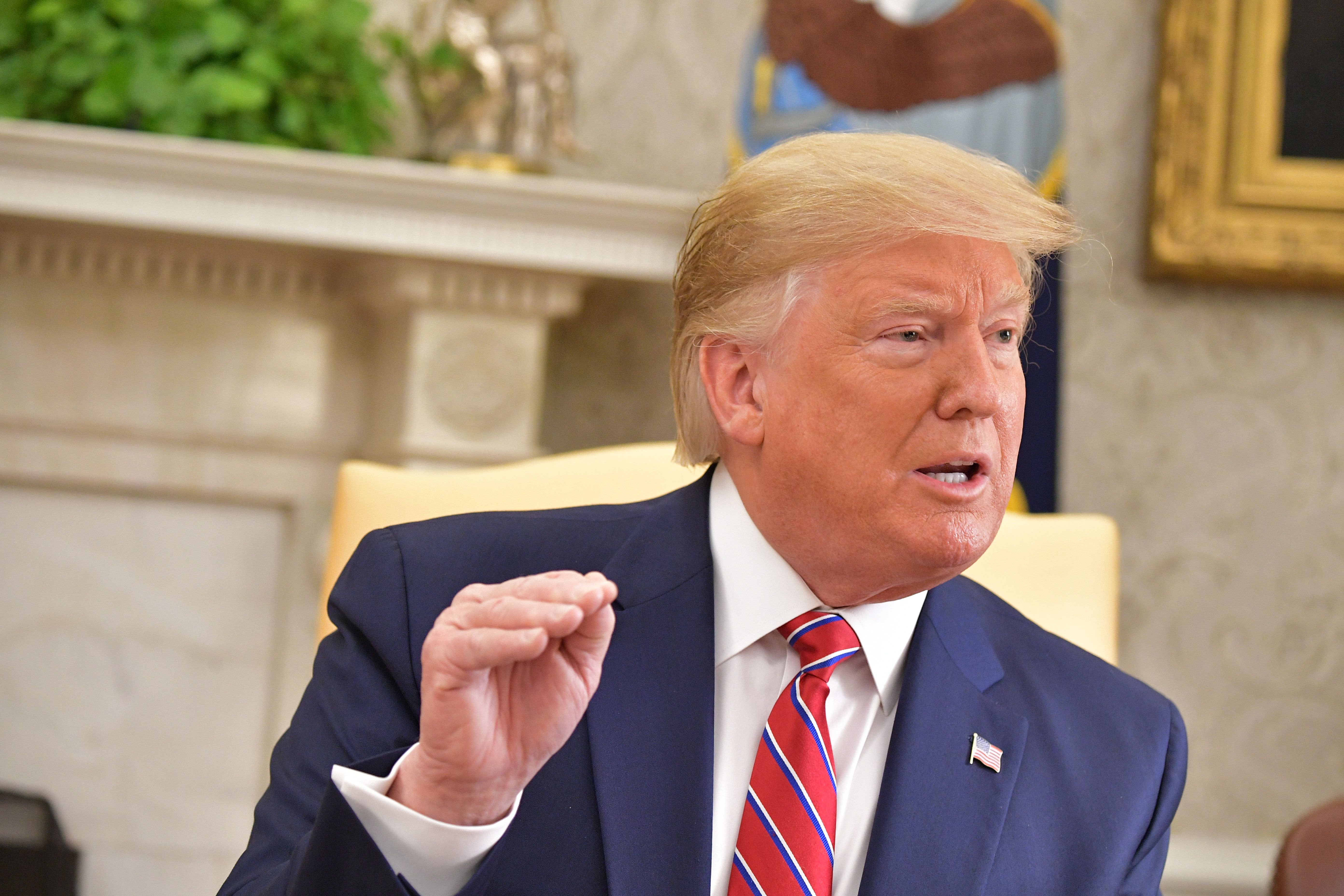
US President Donald Trump speaks with Poland's President Andrzej Duda(not shown) as they take part in an Oval Office meeting at the White House in Washington, DC on June 12, 2019.

Mandel Ngan | AFP | Getty Images

President Donald Trump said Friday that if Iran were to block the Strait of Hormuz, "it's not going to be closed for long," but he did not elaborate on whether the United States had an obligation to keep open the international shipping gateway, which is critical to the oil industry.

"They're not going to be closing [the strait]," Trump said in response to a hypothetical question during a telephone interview on "Fox and Friends."

"They know it, and they've been told in very strong terms. We want to get them back at the table, if they want to go back," he said, referring to the administration's ongoing efforts to start bilateral negotiations on a new nuclear deal with Iran.

"I'm ready when they are, but whenever they're ready, it's OK. And in the meantime, I'm in no rush. I'm in no rush," he added.

Earlier this year, Iran threatened to close the strait in response to a U.S. decision to end waivers on reimposed sanctions for companies that export oil from Iran. However, analysts question whether closing the channel is feasible, given the large American naval presence in the strait and the portions of coastline that are controlled by Oman and the United Arab Emirates.

The president was responding to attacks Thursday on two oil tankers in the Gulf of Oman, south of the strait, for which the United States has blamed Iran. The Strait of Hormuz is a crucial maritime shipping channel that serves as a gateway for up to a third of all the world's tanker-carried crude oil and petroleum products.

Iran denies any involvement in the attacks. On Thursday, Iran's mission to the United Nations said in a statement: "Iran categorically rejects the U.S. unfounded claim with regard to 13 June oil tanker incidents and condemns it in the strongest possible terms."

But Trump and members of his administration, including Secretary of State Mike Pompeo, have left no doubt about whom the United States holds responsible for the attacks, citing video evidence they say shows members of Iran's Revolutionary Guard Corps removing an unexploded mine from one of the ships after it was ablaze.

"Iran did do it. That was the boat, that was them," Trump said.

Thursday's attacks were the second time in just over a month that ships have been attacked by forces the White House says are directly tied to the Iranian regime. On May 12, four tankers in the same area were attacked.

Nonetheless, Trump argued that Iran has "changed a lot since I've been president."

"They were unstoppable, and now they're in deep deep trouble," Trump said. He did not, however, explain the relationship between these apparently positive changes and the recent attacks, which have rattled international petroleum markets and raised the specter of armed conflict in the Middle East.

"When I came into office, they were an absolute terror, they were all over the place, they were in Yemen they were in Syria, we had 14 sites of conflict, and they were in charge of every single place. They were a nation of terror," Trump said.

The president claimed that the U.S. decision to pull out of the Iran nuclear deal last year and reimpose sanctions on Iran has had a positive impact by pressuring the Islamic Republic to return to the negotiating table in order to hash out a bilateral nuclear accord, something which has not happened yet.

Trump claimed without evidence that under the previous nuclear deal, Iran would have acquired nuclear weapons in "five or six years," adding, "They cannot have nuclear weapons, We have enough problems with nuclear weapons, which is one of the great difficulties of the world."

The president did not appear to have a ready answer to the question of how the United States intended to stop attacks like the ones on the two oil tankers.

"We're going to see how to stop these outrageous acts," Trump said in response to a question about what the United States intended to do next. "We'll see what happens, and we don't take it lightly, I can tell you that."


Read More

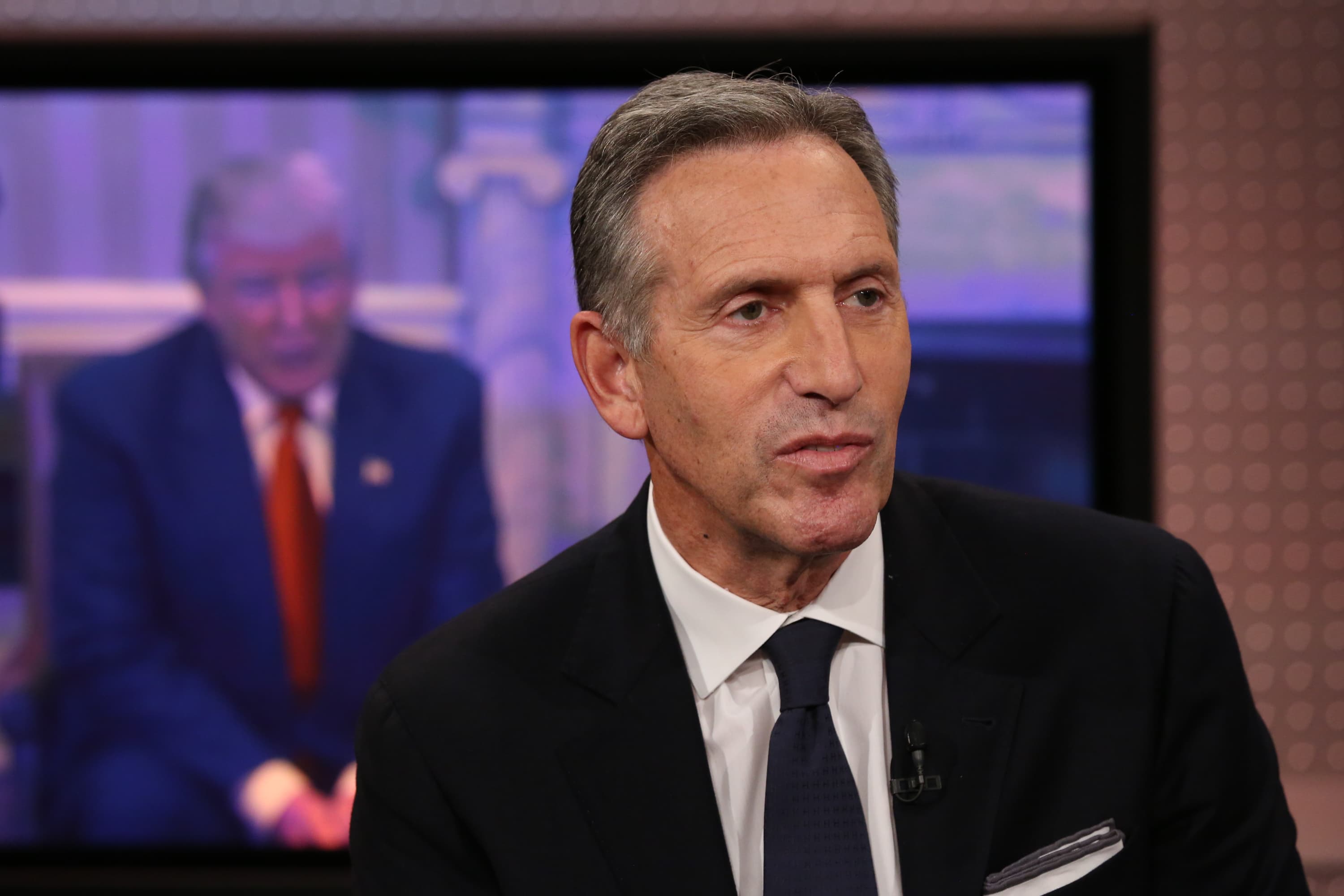
Howard Schultz on Mad Money.

Adam Jeffery | CNBC

Howard Schultz, the billionaire former CEO of Starbucks who is considering an independent run for president, is taking the summer off from political activities and has laid off several staffers – but he is sticking with veteran strategist Steve Schmidt.

"Steve has advised Howard for quite a while and will continue to do so," said a senior Schultz aide who declined to be named. Schultz, the aide added, "is realigning his team as he moves into the next phase of an exploration."

Schmidt was a senior campaign strategist on Sen. John McCain's 2008 presidential campaign and was, until earlier this year, a frequent and vocal media critic of President Donald Trump's.

Schultz has dramatically scaled back his political activities since he announced in January that he would consider a centrist bid for the presidency, targeting both Trump and what he has called an increasingly liberal Democratic Party.

On Wednesday, Schultz released a statement saying that he was recovering from three back surgeries. He said he would be "back in touch after Labor Day" but did not say whether his next announcement will about a potential presidential run.

Schultz's last speaking engagement came in April in Arizona. He canceled events in Utah, San Francisco and Dallas.

While Schultz is out of the spotlight, Schmidt and his team will continue to help the former Starbucks boss "assess the landscape and the viability of running for president as an independent," said another aide, who declined to be named.

Schmidt himself has gone dark. His last public remarks came in February, when he stormed off his own podcast after co-hosts grilled him about backing Schultz. During the interview, he said he was going to open a 501c4 dedicated to building a third party movement that would be funded by Schultz. So far, none of that has come to fruition.

Schmidt, who quit the Republican Party in 2018, has even scaled back his presence on social media, where he would routinely hammer Trump. His last tweet came Jan. 24, when he hit the House GOP for voting against a bill that barred Trump from deciding to exit the North Atlantic Treaty Organization.

Schmidt did not return repeated requests for comment.

Schultz's break comes as former Vice President Joe Biden continues to enjoy strong support in polls. Biden is considered a centrist Democrat and is perceived as a candidate who would capture the kind of moderate voters Schultz would seek.

People close to Schultz said that the strength of Biden's appeal will be a deciding factor for whether the coffee tycoon officially launches a run for president.

Biden consistently leads the expansive Democratic field in state and national polls, According to a Real Clear Politics polling average, Biden is ahead of his 22 rivals with a 32% average. Self-described democratic socialist Sen. Bernie Sanders is second with a 16% average.


Read More

Journalist Ivan Golunov (R) is greeted as he leaves the offices of the Main Investigations Directorate of the Moscow police after being released from custody; Golunov, who works for the online news portal Meduza, was detained on 6 June 2019 in central Moscow on suspicion of drug dealing; the police has dropped the investigation against Golunov due to lack of evidence.

Artyom Geodakyan | TASS | Getty Images

A Russian investigative journalist who was charged with drug dealing, widely seen as fabricated charges, has been freed after a widespread public outcry and media rebellion against the case.

Journalist Ivan Golunov was arrested last Thursday by police in Moscow who said they found mephedrone on Golunov and cocaine at his flat. He was then charged over the weekend with possessing drugs with intent to supply.

Golunov denied all the accusations and said the drugs had been planted on him. The case quickly quickly garnered public attention, however, and was widely seen as an attempt to frame the reporter and restrict media freedom. As such, his release from house arrest late Tuesday has been lauded as a triumph for press freedom and protest in Russia.

Rare victory

Golunov wept as he was freed from police custody on Tuesday (after a brief house arrest) and said he would continue his investigative work which has seen him delve into alleged corruption among Moscow officials and other topics.

"I will continue the work I was doing. I will be doing investigations because I have to justify the trust of those who supported me," he said on Tuesday, according to local Russian media reports.

His lawyer Sergey Badamshin said the release represented a triumph of law and justice. ""In Golunov's case, law and justice won in the end. This is much more than simply a dismissal of a criminal case against an innocent person," he said, Russian news agency Tass reported.

The release came after Russian Interior Minister Vladimir Kolokoltsev said earlier on Tuesday that the criminal case against Golunov on suspicion had been dismissed "in view of the failure to prove his participation in the crime." The officers that apprehended Golunov have been suspended and an investigation has been launched, Tass said.

Golunov's employer -- the Russian-language news site Meduza, based in Latvia -- said the release of Golunov from his house arrest was "the result of an unprecedented international solidarity campaign among both journalists and their allies."

"Together, we made the unbelievable happen: we stopped the criminal prosecution of an innocent man. Thank you!," a statement on its website said.

Pressure on the authorities

Pressure had mounted on the Russian authorities to free Golunov following his arrest last week and charges at the weekend. His arrest prompted a rare show of solidarity in Russia from the public and press alike.

Public protests have been held place in Moscow, and newspapers Vedemosti, RBC and Kommersant joined forces issuing coordinated headlines stating "I/We are Ivan Golunov" and called for his release.

Golunov's case has sparked interest internationally. Russia is known as a country where journalists are routinely harassed and subjected to violent attacks if they have carried out investigative work into crime or corruption. It was ranked at 149 out of 180 nations for press freedom, according to free press advocacy group Reporters Without Borders' 2019 World Free Press Index.

Journalist Ivan Golunov (centre, with his back to the camera) talks to reporters outside the offices of the Main Investigations Directorate of the Moscow police after being released from custody.

Artyom Geodakyan | TASS | Getty Images

In its latest assessment of Russia, the group said "the climate has become very oppressive for those who question the new patriotic and neo-conservative discourse, or just try to maintain quality journalism " and that more journalists are now in prison since the fall of the Soviet Union in 1991.

Freeing Golunov has been seen as a reflection of the authorities' nervousness at potential wider unrest that's rumbling following an unpopular pension reform and a tax hike, however. Ahead of the journalist's release, the Kremlin said that it was following the "high-visibility" case closely.

President Vladimir Putin has been asked by the interior minister to dismiss two high-ranking police officials over the Golunov case. Putin's spokesman Dmitry Peskov said the president would review that request "in a timely fashion," Tass said.


Read More

Representative Jerry Nadler, a Democrat from New York and chairman of the House Judiciary Committee, speaks during a news conference in New York, U.S., on Wednesday, May 29, 2019.

Jeenah Moon | Bloomberg | Getty Images

House Judiciary Committee Chairman Jerry Nadler, D-N.Y., on Monday said he would hold off on contempt proceedings for officials in President Donald Trump's administration because the Justice Department had begun sharing special counsel Robert Mueller's "most important files" with lawmakers.

House Democrats had threatened to hold Attorney General William Barr and former White House counsel Don McGahn in contempt for failing to comply with subpoenas. A vote was expected for Tuesday in the House.

But Nadler said in a statement Monday that, "Given our conversations with the Department, I will hold the criminal contempt process in abeyance for now."

Nadler's committee had subpoenaed Barr to hand over the unredacted version of Mueller's report on Russian election meddling, possible coordination with Trump's 2016 campaign and possible obstruction of justice by Trump himself. It also asked for the underlying evidence that was used as the basis for Mueller's report.

The committee subpoenaed McGahn, who was one of the most-cited witnesses in the 448-page report, to testify before the committee. The White House directed McGahn not to comply with that subpoena.

Nadler's statement did not suggest that the DOJ had agreed to hand over the entire report without any redaction, which the department has argued would violate federal rules about revealing grand jury testimony. A spokeswoman for the DOJ did not immediately respond to CNBC's request for comment on Nadler's statement.

Mueller found insufficient evidence to show coordination between the Trump campaign and Russia. He declined to conclude whether the president obstructed justice but noted that the report did not exonerate him. Barr and Deputy Attorney General Rod Rosenstein determined, based on the Mueller report, that there wasn't enough evidence to support an obstruction offense.

Read Nadler's full statement below:

"I am pleased to announce that the Department of Justice has agreed to begin complying with our committee's subpoena by opening Robert Mueller's most important files to us, providing us with key evidence that the Special Counsel used to assess whether the President and others obstructed justice or were engaged in other misconduct. The Department will share the first of these documents with us later today. All members of the Judiciary Committee—Democrats and Republicans alike—will be able to view them. These documents will allow us to perform our constitutional duties and decide how to respond to the allegations laid out against the President by the Special Counsel.

"Given our conversations with the Department, I will hold the criminal contempt process in abeyance for now. We have agreed to allow the Department time to demonstrate compliance with this agreement. If the Department proceeds in good faith and we are able to obtain everything that we need, then there will be no need to take further steps. If important information is held back, then we will have no choice but to enforce our subpoena in court and consider other remedies. It is critical that Congress is able to obtain the information we need to do our jobs, ensuring no one is above the law and bringing the American public the transparency they deserve."


Read More

U.S. Sen. Bernie Sanders (I-VT) speaks during a rally in front of the Capitol April 26, 2017 in Washington, DC.

Alex Wong | Getty Images

A 2016 debate question about Hillary Clinton's support for a $15 per hour minimum wage sparked a spat between the former secretary of State and Sen. Bernie Sanders.

"If you're both screaming at each other, the viewers won't be able to hear either of you," CNN moderator Wolf Blitzer said after Sanders repeatedly jumped in to dispute how Clinton described her stance.

Clinton had backed only a $12 per hour federal minimum wage, though the former senator from New York noted that she "supported the fight for $15" at the state and local level in high-cost areas. Sanders had a different goal: "$15 in minimum wage in 50 states in this country as soon as possible."

Only three years later, disagreements over hiking the $7.25 per hour U.S. wage floor have all but vanished in the 2020 Democratic primary. All of the leading contenders for the Democratic presidential nomination — from self-proclaimed democratic socialist Sanders to the more centrist former Vice President Joe Biden — have backed a $15 per hour federal minimum wage.

Buoyed by activists who helped to push seven states to enact $15 wage floors, Democratic candidates have tossed aside caution about a sweeping nationwide minimum wage hike. As they vie with President Donald Trump for support from working-class voters, the party hopes a more direct action to boost pay will be more appealing than Trump's approach: leaving minimum wage decisions to states and hoping economic growth will cause pay increases.

In a race that will test whether a strong economy can save a president with a poor approval rating, Democrats see raising the pay floor as one way they can cast themselves as a better alternative to fatten workers' wallets.

Raising the minimum wage "speaks so clearly and directly to trying to resolve that problem, it is going to resonate even to folks who are going to be conservative on other issues," said David Cooper, a senior economic analyst at the Economic Policy Institute, a left-leaning think tank that studies how policy affects low and middle-income people.

A White House spokesman did not immediately respond to questions about the president's stance on the U.S. minimum wage. But Trump has previously argued the federal government should let states decide the wage floor.

Democrats will have to counter the narrative the Trump campaign has already tried to enforce: That the tax cuts and regulatory relief he championed have boosted economic growth and wages — without an increase in the federal pay floor.

"Wages are rising at the fastest pace in decades and growing for blue collar workers, who I promised to fight for, they're growing faster than anyone else thought possible," Trump said during his State of the Union address in February. (Though wage growth adjusted for inflation picked up earlier this year, Trump's claim that it was the highest in decades is unfounded, according to the Associated Press).

State wages spike as U.S. minimum is stagnant

The last federal minimum wage hike took effect roughly a decade ago in July 2009. Proponents of raising the pay floor to $15 an hour argue in part that paychecks have "barely budged" and that workers everywhere — "not just on the coasts" — need it to survive, said Paul Sonn, director of the National Employment Law Project Action Fund. But opponents worry $15 is too drastic an increase in parts of the country and would force employers to slash positions and hours.

Cities and states, spurred in part by labor activists led by the Fight for $15 group, have changed the narrative on minimum wage hikes in recent years. Twenty-nine states and Washington D.C. have pay floors higher than $7.25 per hour. This year alone, New Jersey, Illinois, Maryland and Connecticut passed bills to gradually raise their minimum wages to $15 per hour, joining New York, California, Massachusetts and D.C.

Experts on the minimum wage say the flurry of hikes at the state and local level helped to make a $15 per hour minimum wage more palatable for candidates beyond the liberals in Sanders' mold. The views of Biden and the Obama administration largely reflect the mainstream Democratic thinking on the minimum wage in recent years.

President Barack Obama first proposed a $9 per hour federal minimum wage in his 2013 State of the Union. His administration then backed congressional Democrats' bill to raise the pay floor to $10.10 later that year. By 2015, the White House supported a Democratic proposal for a $12 minimum wage.

In September 2015, Biden joined New York Gov. Andrew Cuomo as he made the case for a statewide $15 per hour minimum wage. By the time he launched his 2020 presidential campaign in late April, Biden argued "it's way past time we make a $15 minimum wage the law of the land."

In the absence of federal action, activists have also pushed massive employers to hike their pay. Amazon and Target, for example, have taken steps to increase their minimum wages to $15 per hour. Amid pressure from Sanders — who appeared at Walmart's annual meeting Wednesday and accused the retailer of paying "starvation wages" — Walmart CEO Doug McMillon called on Congress to hike the federal minimum wage, which he called "too low."

Congress now sits closer to a minimum wage hike than it has in years. The Democratic-held House could vote as soon as this month on a bill that would gradually increase the U.S. pay floor to $15 per hour.

Party leaders have to overcome skepticism within their own caucus first. Thirteen Democrats led by Rep. Terri Sewell of Alabama introduced a bill in April to set varied minimum wages based on regional cost of living, which would increase to $15 per hour at different paces.

"The PHASE-in $15 Wage Act establishes a regional minimum wage structure that provides all minimum wage workers with a much-needed raise while protecting jobs, giving every community the flexibility to grow their economy and taking into account that the cost of living in Selma, Alabama, is very different than New York City," Sewell said in a statement introducing the legislation.

Even if Democrats can get a minimum wage hike through the House, any legislation will face a tough path to approval in the GOP-held Senate.

Wage hikes and the economy

The concerns Sewell and some Democrats have about a blanket $15 per hour minimum wage are common ones. Critics worry businesses in some areas that currently have relatively low pay or cost of living will struggle to take on the costs from the pay increases. A $15 wage "would be incredibly disruptive" in parts of the country, said Michael Strain, director of economic policy studies at the right-leaning American Enterprise Institute.

So just how have the recent minimum wage increases affected workers and the economy?

It appears minimum wage hikes — along with a tightening labor market — have helped to drive pay higher at lower U.S. income levels. After a period of stagnation, wages for all employees after accounting for inflation started rising in recent months: They increased 1.2% in April from the previous year, according to the Labor Department.

But minimum wage workers appear to have fared better than all employees. Average wages for the bottom third of earners climbed by an average of 2.3% annually over the last three years after accounting for inflation, Ernie Tedeschi, the head of fiscal analysis at Evercore ISI, wrote in April. He added that "the growth pressure from the wages of workers at or just around the minimum wage can account for between a quarter to a third of this growth."

Tedeschi estimates that the effective minimum wage — when considering federal, state and local laws — is actually about $11.80 this year.

While minimum wage hikes appear to have lifted pay for numerous workers, Strain notes that assessing the effects of a $15 per hour minimum wage, specifically, is still difficult. While states and cities have passed laws to increase their pay floors to that level, a $15 wage will not actually take effect for years in many areas.

Dramatic minimum wage increases have always brought fears of trade offs. Critics have said hiking the pay floor could reduce the number of hours worked, even if pay during those hours rises. Strain says "only people who are employed earn wages."

One recent study suggests a major pay floor increase affected hours at the local level. Seattle's minimum wage increase to $13 per hour — part of the city's path to a $15 pay floor — reduced hours worked in low-wage jobs by 6% to 7%, according to a May 2018 National Bureau of Economic Research working paper.

Regardless of potential drawbacks, Democrats are set on using the minimum wage as a remedy for the Trump economy's flaws in 2020. The push for a $15 minimum wage will go beyond the presidential contest into certain House and Senate races as Democrats and Republicans vie for control of both chambers.

Top Democrats used the nonfarm payrolls data for May, released Friday by the Labor Department, as another opportunity to stump for a $15 pay floor. The report showed worse than expected job creation and slowing wage growth.

"Today's jobs report suggests that American workers are being put at risk by the president's erratic economic policies," Rep. Bobby Scott, a Virginia Democrat and chairman of the House Education and Labor Committee, said in a statement Friday. "The report also shows that workers' wages are still not keeping pace with the rising cost of living. Congress must take action to ensure that all Americans can enjoy the benefits of economic growth."

CNBC's John Schoen contributed to this article.

Subscribe to CNBC on YouTube.


Read More

Democratic presidential candidate, former Vice President Joe Biden speaks during the Human Rights Campaign dinner at Ohio State University, Saturday, June 1, 2019, in Columbus, Ohio.

Paul Vernon | AP

Joe Biden, the front-runner in the Democratic presidential primary, said Thursday that he supports the repeal of the Hyde Amendment, which bars federal funding for most abortions.

"Women's rights and women's health are under assault like we haven't seen in the last 50 years," the former vice president said at an event in Atlanta. "If I believe healthcare is a right, as I do, I can no longer support an amendment that makes that right dependent on someone's zip code."

His comments come after he faced criticism this week for his support for the measure.

The Hyde Amendment bars federal funding for abortions — except in cases of rape or incest, or when the life of the mother is at risk.

Read more: Joe Biden says he still supports ban on federal funding of abortions, after apparent reversal

Thursday's announcement marks the second time in about a month that Biden has appeared to reverse his position on the Hyde Amendment.

At an event in South Carolina in early May, Biden told an ACLU volunteer that he supported abolishing the Hyde Amendment.

"It can't stay," Biden said at that time.

Then, on Wednesday, Biden's campaign said that the Delaware Democrat still supported the law, and had misheard the ACLU volunteer's question.

"He has not at this point changed his position on the Hyde Amendment," the campaign told CNBC Wednesday in a statement.

"The Hyde Amendment does not prevent organizations in the US that provide lifesaving health care services for women from receiving the federal funding they need. But given the current draconian attempts to limit access to abortion, if avenues for women to access their protected rights under Roe V Wade are closed, he would be open to repeal," the statement said. The Roe v. Wade was the landmark Supreme Court ruling in 1973 that barred state abortion bans.

Biden's continued support for the Hyde Amendment sparked a unified uproar among his fellow Democrats and from reproductive rights groups, including Planned Parenthood, EMILY's List and NARAL.

In a statement Thursday, Biden's campaign said: "He has for many years as a United States Senator – as have many people – supported the Hyde Amendment."

But the campaign said that "he acknowledged tonight that the circumstances have changed."

"It's clear these folks will stop at nothing to get rid of Roe — and it's clear we have to be just as strong in our defense of it. He cannot justify leaving millions of people without access to the care they need, or the ability to exercise a constitutionally protected right," the statement said. "He believes health care is a right and he can no longer support an Amendment that makes it a right dependent on one's income or zip code."

Biden's announcement in Atlanta is noteworthy. Georgia's Republican governor last month signed into law a ban on abortions after a doctor can detect a fetal heartbeat, or about six weeks.

Companies including Disney, Netflix, and CNBC parent NBCUniversal have said that if the law goes into effect, it could influence their decisions regarding working in the state.


Read More

Former Vice President and 2020 Democratic front-runner Joe Biden plans to return to Iowa next Tuesday. He may bump into President Donald Trump who also plans a visit to the state that day.

Biden's campaign was mum on the details of his trip, which marks only his second visit to the key caucus state since formally declaring a 2020 run for the White House on April 25. It's the veteran politician's third try to win the highest office in the land.

Trump is scheduled to attend a GOP fundraiser in West Des Moines and visit an ethanol plant in Council Bluffs during his visit next week. The president is expected to tout his administration's new E15 gasoline rule for ethanol, a policy change seen as a win for farmers since it will allow year-round use of the corn-based fuel.

Farmers gave Trump strong support in the 2016 presidential election, but the administration's trade war against China has resulted in punitive tariffs targeting many of farm state's top agricultural commodities, including soybeans and pork. The president has sought to soften the blow through a new $16 billion farm aid bailout.

Trump's threat to impose 5% tariffs on Mexican goods starting June 10 raises the possibility of additional trade retaliation and fallout for American farmers. The White House said last week it will gradually increase that tariff amount, hitting a maximum of 25% by Oct. 1, until Mexico "substantially stops the illegal inflow of aliens coming through its territory."

While campaigning for the 2018 midterms, Biden talked about the trade war's impact on farmers when stumping for Democratic candidates, including in North Dakota for then-Sen. Heidi Heitkamp, who lost her seat to Republican Kevin Cramer. He also brought up the trade issue during a visit to New Hampshire in mid-May.

"The fact of the matter is that what we're really doing, you can't get much done on trade relative to China by engaging in a trade war that only hurts working people and farmers," Biden said last month. "What you have to do is you need the whole world and the folks who agree with us who are getting beat up by China working together, but he's alienated most of our allies."

A White House official said via email that the president's visit to Iowa and the nation's heartland is "to reaffirm his commitment to supporting and defending America's farmers." The official added that support includes the trade and disaster aid for farmers.

On Tuesday, Biden also may provide more details on his new $1.7 trillion plan to fight climate change, which includes investments in advanced biofuels and "climate-friendly farming" like conservation programs.

Several of Biden's Democratic challengers, including Sens. Bernie Sanders of Vermont, Elizabeth Warren of Massachusetts and Amy Klobuchar of Minnesota, have been outspoken about the plight of family farmers. The Senators have also expressed support for breaking up big agriculture.

National polls show Biden ahead of the pack for the 2020 Democratic presidential nomination, with a double-digit lead against his nearest rival, Sanders. The nonpartisan Real Clear Politics website says Biden's average in polls from mid-May through June 4 was 33.5% to Sanders' 16.7%.

In Iowa, Biden only has a 4-point lead over Sanders, according to the Real Clear Politics average in polls from March 21 to mid-April.

Nationally, Biden has an 8.1-point lead over Trump, the website's poll average from mid-March to mid-May shows. Prior to entering the race, Iowa polling data had Biden running ahead of Trump with up to a 6-point lead, according to the site.

The last time Biden visited Iowa was for a two-day visit April 30-May 1, traveling to three eastern cities for four events. During a stop in Iowa City, he talked about working-class values, health care, education and promised to "restore the soul of America."

"It's good that he is coming back," said Iowa State Rep. Lisa Heddens, a Democrat and longtime Biden supporter who introduced him during his last visit to Des Moines. "But I don't think he needs to go to the level that some of the other candidates do, because he is so well recognized."

Biden plans to skip a high-profile event ahead of the summer caucus season — Sunday's Iowa Democratic Party Hall of Fame celebration in Cedar Rapids. At least 19 presidential candidates are scheduled to speak at the event, making it the greatest single gathering of 2020 Democratic hopefuls to date.

Similarly, Biden skipped the California Democratic Party Convention last weekend in San Francisco. There were 14 Democratic presidential candidates at the convention, and some took jabs at the former vice president who served from 2009 to 2017.

"We cannot go back to the old ways," Sanders said. "We have got to go forward with a new, progressive agenda."

Sanders, meantime, is scheduled to arrive in Iowa on Friday and stay over the weekend for at least seven events, including the Democratic Hall of Fame celebration. This will mark Sanders' fourth trip to Iowa as a 2020 contender, according to his campaign.

Biden appears to be trying to stay above the fray in the crowded field of more than 20 Democrats, focusing on his climate and economic policies rather than taking on party rivals.

"I think the worst thing we could do is get into a match where we're going after each other in the Democratic Party," Biden told the New Hampshire's Concord Monitor in an interview Tuesday. "So I'm going to try my best not to be negative relative to my opponents."


Read More

Anti-China sentiment is rising in Washington — and Beijing should not underestimate that, a former under secretary for international affairs at the U.S. Department of Treasury said on Thursday.

"I worry that Chinese authorities ... underestimate how broadly the anti-Chinese sentiment is in Washington — it runs across the full political spectrum," said Tim Adams, who is now president and chief executive of the Institute of International Finance (IIF), a trade association.

Even though the current administration is the one that has led the charge on the trade war with China, he said, "almost all" the 24 Democrats running for president in 2020 have "some sort of anti-Chinese sentiment" — whether it be trade or something larger.

"Washington has become decidedly anti-China," Adams told CNBC at the IIF meeting in Tokyo on Thursday.

Similarly, he is concerned that Washington does not understand the rhetoric from Beijing.

"I worry that there are those in Washington who think they understand the Chinese mindset, and that they can force President Xi Jinping to bend (to) the will of Washington's desires, and maybe not appreciate ... the rhetoric coming out of China, " he said.

His comments come as skirmishes between the world's two major powers intensified in recent weeks.

U.S. President Donald Trump announced in early May that tariffs on $200 billion worth of Chinese goods would go up from 10% to 25%. The U.S. has also started looking into whether another $300 billion worth of Chinese goods will be subjected to tariffs. China responded with its own levies on $60 billion of American imports.

Last week, Chinese Vice Foreign Minister Zhang Hanhui said that provoking trade disputes amounted to "naked economic terrorism. " Chinese media also warned the U.S. that Beijing could cut off industrially significant rare earth minerals as a retaliatory measure in the escalating trade battle.

Both sides have ramped up the battle on the tech and education fronts as well.

On Tuesday, China issued a warning to its citizens about working, studying and traveling in America, noting that the U.S. has recently placed certain restrictions on some Chinese student visas.

Adams warned that the world powers could make "miscalculations" as tensions ramp up, and that could trigger a growth slowdown.

Turning to the U.S. economy, he said: "I don't think the economy is going to hit a wall anytime soon, unless we make serious policy mistakes — which we're capable of doing."

However, he pointed out that there could be "miscalculations" in Washington, Beijing and other capitals, where trade and nationalism are concerned, and that could "potentially trip us into a lower growth trajectory."


Read More

Income inequality has captured America's economic debate.

President Donald Trump, elected with the votes of discontented blue-collar workers, slaps tariffs on allies and adversaries alike in the name of restoring yesterday's middle-class manufacturing jobs. His 2020 Democratic challengers demand an array of federal initiatives, including higher minimum wages, tax hikes on the rich and reshuffling the balance of power between business and labor.

Indeed, the rising gap between the rich and everyone else has fueled unrest across the world, from Europe's ongoing Brexit crisis to this year's elections in India. A sharp reduction in extreme poverty globally has not diminished the sense of loss among middle- and working-class citizens of countries with advanced economies.

Why has this happened? And why has it grown so pronounced in the United States?

Here are five causes identified by scholars of the subject:

Technology has altered the nature of work

The digital revolution creates enormous wealth for those with the skills and preparation to take advantage, but it eliminates what economists call "middle-skill" jobs. Computer software and industrial machines now fill roles — from clerical tasks to routine manufacturing — that once produced middle-class incomes for workers without college degrees.

"That has increased the value of abstract problem solving, interpersonal communication, organization skills — things that highly educated workers tend to be very capable of," said MIT professor David Autor. "It has simultaneously devalued a lot of cognitively repetitive tasks in offices (and) on production lines. That has contributed to downward pressure and wage pressure and economic insecurity for the less educated."

Globalization

Competition from rising economies like China's, combined with reduced trade barriers, have further reduced prospects for American workers without advanced skills. That has produced devastating consequences for workers in sectors such as textiles, furniture and leather goods.

"The biggest economic story of the last 50 years has been China going from a poor and backward country, in perpetual political and economic crisis, to a frontier manufacturer with pretty well educated, highly available skilled labor using modern technology," said Autor. "That's primarily a function of internal developments in China — the decision to allow free mobility of labor, to adopt Western technology and foreign direct investment, and to start trading throughout the world.

"That had a big effect on the United States even in the 1990s prior to China's joining the World Trade Organization," he added. "But when China joined in 2001 that further opened the floodgates, and had a dramatic accelerant effect on the rate at which competition entered the U.S. market for manufactured goods."

The rise of superstars

Breakthrough firms such as Apple and Amazon can attract revenue across the world on a scale far larger than in previous generations. That produces immense jackpots for those companies and the executives who lead them, turning the pay gap between top executives and the workers they employ into a chasm.

It has also widened the gap between the metropolises those firms call home and less-populous small-towns and rural areas.

"There is increasingly divergence and economic growth and economic outcomes across places in the U.S.," said University of Maryland economist Melissa Kearney. "Along with these superstar workers, and these superstar firms, we now have superstar cities in our increasingly winner-take-all economy."

The decline of organized labor

The share of workers represented by labor unions has dropped by half, to just over 10%, over the last four decades. That has shrunk their power to bargain for higher wages and benefits.

Inaction by Congress has shrunk the buying power of the lowest-paid workers. Because the $7.25 per hour minimum wage has not been increased to keep pace with inflation, its value has fallen 16% over the past half-century.

Changing, and breaking, the rules

Rising wealth confers political power, and it has allowed economic winners to further reward themselves through government policies. The 2017 GOP tax cut delivers a disproportionate share of its benefits to the most affluent Americans.

The same goes for policies at private institutions. Admissions procedures at top colleges favor the children of donors and past graduates. As the recent scandal ensnaring prominent entertainers and athletic coaches demonstrates, those with money can also buy illicit advantages.

The market incentives income inequality creates — for hard work and risk-taking — helps make America's economy dynamic. But they also impose costs.

We need some inequality. The problem is when that dynamism gives rise to dynasticism. Kids of affluent parents, even if they're of mediocre talent, go to the best schools and talented kids from less affluent families don't.

David Autor

MIT professor

"We need some inequality," said Autor. "The problem is when that dynamism gives rise to dynasticism. Kids of affluent parents, even if they're of mediocre talent, go to the best schools and talented kids from less affluent families don't. It's not just a loss for them. That means our society will be less productive."

It also keeps Americans unhappy. Despite solid top-line economic growth, the 2020 presidential election promises to be just as contentious as recent national campaigns that have repeatedly flipped the party in control of the White House or Congress.

"People are increasingly likely to report that they believe the system is rigged against them," said Kearney. "This is damaging for the functioning of our democracy, but I actually think also for the functioning of our economy.

"We're going to see people in increasing numbers dropping out of our mainstream drive for economic success. It's leading to large, loud political cries for completely upending our capitalist system."


Read More

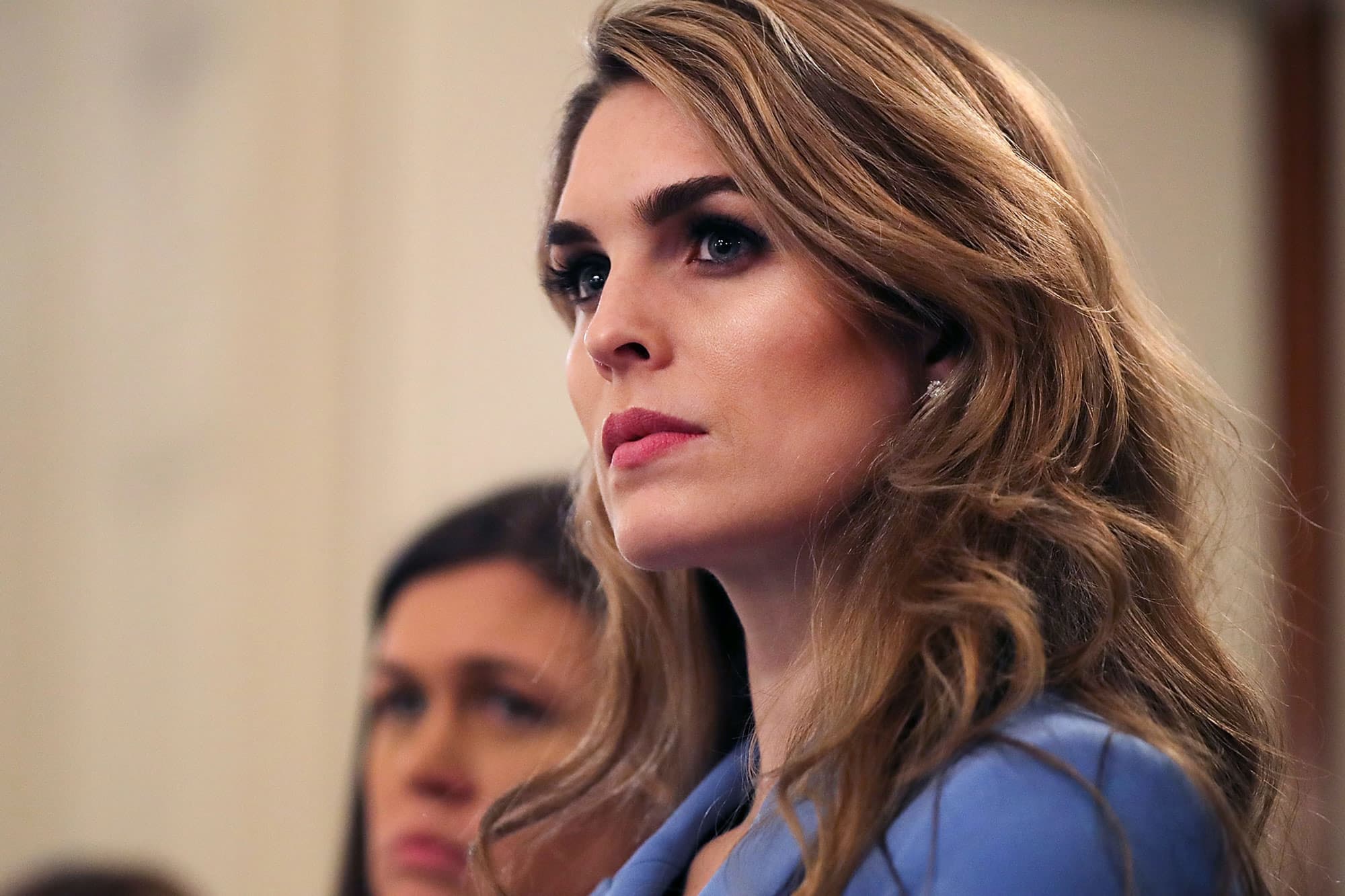
Former White House Communications Director Hope Hicks.

Getty Images

The White House has instructed former staffers Hope Hicks and Annie Donaldson not to comply with the House Judiciary Committee's subpoenas to turn over documents related to their time in President Donald Trump's administration, House Democrats said Tuesday.

But Hicks, a former White House communications director, said she will still hand over documents related to Trump's 2016 presidential campaign, according to the House Judiciary Committee.

CNN first reported that Hicks and Donaldson would not fully comply with the House Democrats' subpoenas.

House Judiciary Committee Chairman Jerry Nadler, D-N.Y, said in statement that the White House's move was "part of President Trump's continued obstruction of Congress."

But Nadler noted that Hicks "has agreed to turn over some documents to the committee related to her time working for the Trump Campaign."

"I thank her for that show of good faith," Nadler said.

Politico, citing two sources familiar with Hicks' contacts with the Judiciary Committee, reported that the former White House staffer, who played a key role in the Trump campaign as communications director, has already begun providing documents to the panel.

Donaldson was former White House counsel Don McGahn's chief of staff. Her notes were heavily cited in special counsel Robert Mueller's report on Russian election interference, possible Trump campaign coordination with the Kremlin and possible obstruction of justice by Trump.

The Judiciary Committee issued subpoenas for Hicks and Donaldson to testify before that panel and provide documents related to a sweeping probe of figures in Trump's orbit.

Both Hicks and Donaldson were ordered to produce the requested documents to the committee by Tuesday. Hicks' subpoena sets a June 19 date for her to testify at a hearing before the Judiciary Committee, while Donaldson is asked to appear June 24 for a deposition.

Rep. Doug Collins, R-Ga., the committee's ranking member, disputed Nadler's characterization.

"The notion the White House directed Hope Hicks or Annie Donaldson to defy a subpoena is not accurate," Collins said in a statement. "In fact, the White House again invited Judiciary Committee Democrats to direct their requests there, which they have yet to do."

But White House counsel Pat Cipollone's letter to Nadler, sent Tuesday, says that "Acting Chief of Staff to the President Mick Mulvaney has directed" Donaldson and Hicks "not to produce documents in response to the Committee's May 21 subpoenas that relate in any way to the White House."

"The White House records at issue involve significant Executive Branch confidentiality interests," Cipollone wrote, adding that the committee and the Justice Department were in the midst of working out an "accommodation process" for the lawmakers' requests.

Hicks is now executive vice president and chief communications officer for Fox Corp.

"Federal law makes clear that the documents we requested — documents that left the White House months ago — are no longer covered by executive privilege, if they ever were," Nadler said in his statement.

"The President has no lawful basis for preventing these witnesses from complying with our request. We will continue to seek reasonable accommodation on these and all our discovery requests and intend to press these issues when we obtain the testimony of both Ms. Hicks and Ms. Donaldson," Nadler said.

It was unclear whether the committee would move to hold either Hicks or Donaldson in contempt of Congress.

The White House, Hicks and Donaldson did not immediately respond to CNBC's inquiries about CNN's report.

Read the White House's letter to Nadler:


Read More

Donald Trump during bilateral meetings in Beijing in late 2017.

Jonathan Ernst | Reuters

BEIJING — China took a firm official stance against the United States on trade on Sunday, issuing a white paper that illustrates a widening gap between the two sides.

The paper argues that trade disruptions — which the document claims were launched by the United States — negatively affect the world. It claims that the United States is an untrustworthy negotiator and that the Chinese government wants talks that are equal, mutually beneficial and trustworthy.

U.S. media outlets have reported that Beijing backed out from basically all negotiating points during talks with the United States several weeks ago.

Nothing is agreed until everything is agreed.

Wang Shouwen

Chinese vice commerce minister

At a press conference Sunday, Vice Commerce Minister Wang Shouwen said U.S. actions in the past month are the primary reason for the lack of progress in negotiations.

"During the consultations, China has overcome many difficulties and put forward pragmatic solutions. However, the U.S. has backtracked, and when you give them an inch, they want a yard," Wang said.

Last month, U.S. President Donald Trump announced that tariffs on $200 billion worth of Chinese goods would go up from 10% to 25%. The U.S. has also begun investigating whether $300 billion of other Chinese goods could be subject to tariffs. Finally, the U.S. put Chinese telecom giant Huawei on an list that essentially prevents it from conducting business with U.S. companies.

Wang would not confirm at a press conference Sunday whether Trump and Chinese President Xi Jinping would meet at the G20 meeting at the end of June. Wang said only that China will send representatives to those coming meetings in Japan.

On Friday, China's Commerce Ministry announced it would create a list of what it calls "unreliable entities." State news agency Xinhua subsequently reported that China is investigating Memphis, Tennessee-based FedEx. CNBC confirmed that the shipping giant diverted packages destined for Huawei addresses in Asia.

Wang would not elaborate on details about the unreliable entities list or its implementation, saying such details would be disclosed later.

Wang said Sunday that any foreign companies that act against Chinese law will be subject to Chinese investigations, according to a CNBC translation of his Mandarin-language remarks.

"Nothing is agreed until everything is agreed," Wang said in English, echoing language used by officials on talks between the United Kingdom and European Union over Brexit. He added that both sides need to take a step back and argued that the countries should adhere to the direction agreed upon at the meeting of Trump and Xi in Argentina late last year.

The White House said the U.S. agreed not raise tariffs if a deal with China was reached on its most serious complaints, including China's practice of forcing foreign companies to hand over their technology in exchange for access to China's domestic market — so-called forced technology transfers.

In March, China passed a foreign investment law which it claims will improve intellectual property protection and prevent forced technology transfer. The law is set to take effect next year. Beijing says it has taken steps to allow greater foreign access to its financial and auto industries.

Especially since the latest round of U.S. tariffs, however, Chinese officials have been more vocal in stating they believe that America's primary motive is to prevent China from growing stronger.

Increasingly, officials in Beijing talk of bracing for a dispute that will last decades.

—CNBC's Eunice Yoon contributed to this report.


Read More

White House trade advisor Peter Navarro told CNBC on Friday that President Donald Trump's threat of new tariffs on Mexico is tied to the president's declaration of a national emergency at the border and came in response to Mexico's "export" of "illegal aliens."

In the first public defense of the president's move from a top trade official, Navarro also pushed back on the notion that the tariffs were intended to bring more manufacturing jobs to the United States from Mexico, saying that the tariffs were "not at all" related to that goal.

"This is strictly about national security and threats to our economy from illegal immigration from a criminal enterprise," Navarro said in the interview on "Squawk on the Street. "

But in a series of tweets posted nearly simultaneously with Navarro's appearance, Trump wrote that "In order not to pay Tariffs, if they start rising, companies will leave Mexico, which has taken 30% of our Auto Industry, and come back home to the USA."

"Mexico must take back their country from the drug lords and cartels. The Tariff is about stopping drugs as well as illegals!" he wrote.

In a surprise move, Trump announced Thursday night that the U.S. will slap escalating tariffs on Mexican imports, starting at 5% in less than two weeks, if the country does not take action to reduce unlawful immigration into the United States.

The legal justification for the move, Navarro said, was premised on the International Emergency Economic Powers Act, which requires a national emergency.

"Clearly we have that at the border," Navarro said.

"If you look at it from an investor's point of view and a corporate point of view, what we have in Mexico is the export, one of their high exports, of illegal aliens. And it's a criminal enterprise," Navarro said.

Trump declared a national emergency at the southern border in February after failing to secure funding from Congress for his proposed wall on the U.S.-Mexico border.

Markets tanked on Friday amid worries that the threatened tariffs combined with an escalating U.S.-China trade war could send the economy into a recession.

Navarro urged investors to look at the situation "calmly."

"Look at what we are trying to do. This is actually a brilliant move by the president to get Mexico's attention, to get them to help us, because so far they have just been standing by," Navarro said.

WATCH: The full interview with Peter Navarro


Read More

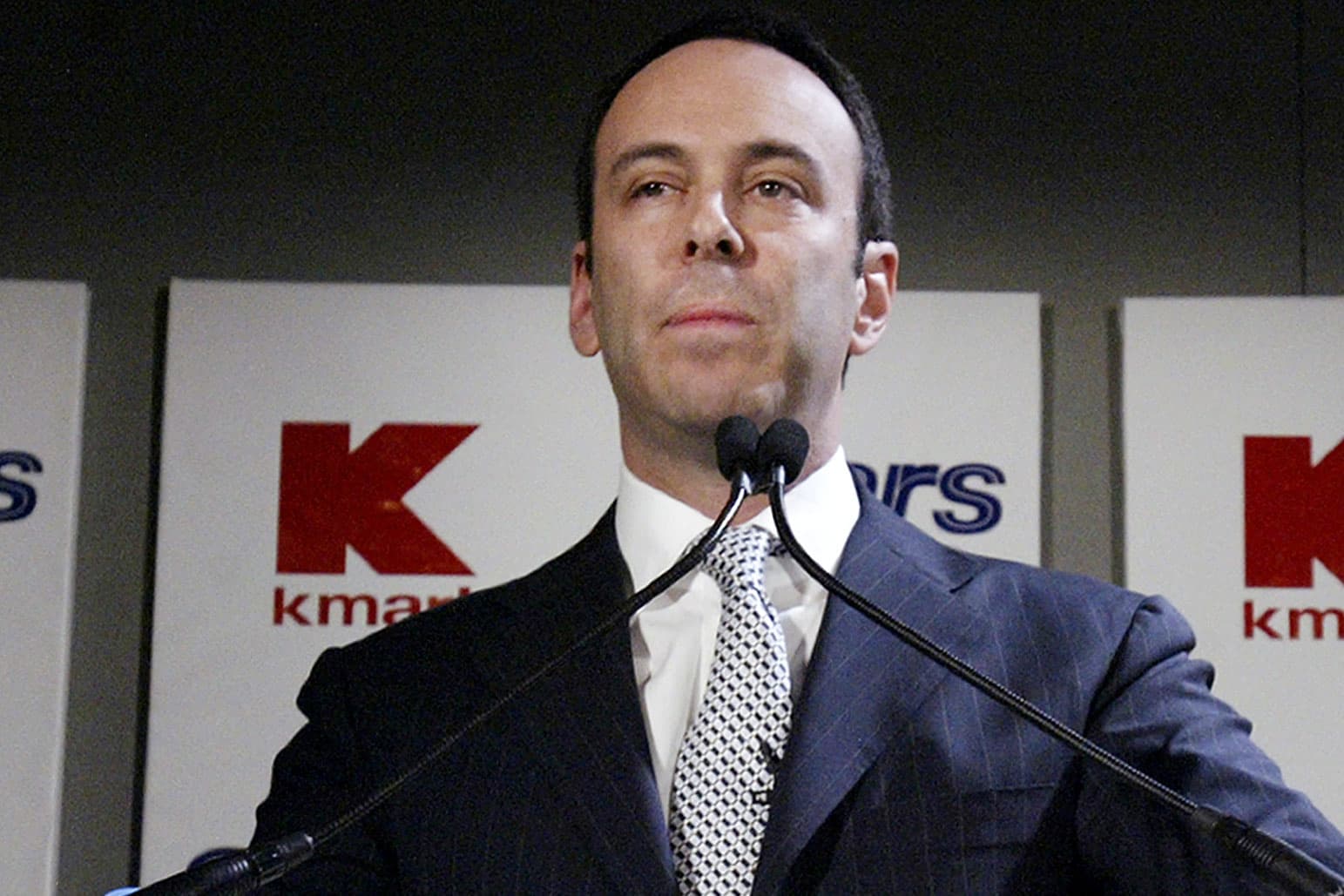
Edward Lampert speaks during a news conference to announce the merger of Kmart and Sears in New York, Nov. 17, 2004.

Gregory Bull | AP

Presidential candidate Sen. Elizabeth Warren and Rep. Alexandria Ocasio-Cortez sent a letter to Sears' former Chairman and CEO Eddie Lampert lambasting him for efforts to avoid repaying Sears for $43 million in severance fees.

Lampert bought Sears out of bankruptcy last year through an affiliate of his hedge fund ESL Investments, Transform Holdco, after years of declines under his leadership as CEO and chairman. The deal, which saved the company from liquidation, also promised that Lampert would reimburse Sears severance costs for workers who lost a job in bankruptcy.

Sears and Lampert have since sparred over what each party believes they are owed by the other as part of the deal. Lampert said in court filings that Sears fell short of what it owes him. To help make up the loss, he is requesting approval from the bankruptcy court judge to not pay back Sears for $43 million in severance fees. The two parties, though, now estimate severance costs to be closer to $20 million.

Still, a spokesperson for Transform told CNBC that severance owed has already been paid. He stated, in part, "To be clear, employees of old Sears who lost their jobs during bankruptcy have already received their severance payments."

He added, "Transform agreed to reimburse Old Sears for these severance payments in exchange for the receipt of certain assets. Old Sears has admitted that $55 million of those assets have not been transferred to Transform, although Transform believes the amount is larger. As a result, Transform is not obligated to reimburse Old Sears for having made the severance payments."

Still, in a letter sent Thursday, Warren, D-Mass., and Ocasio-Cortez, D-N.Y., lashed out at Lampert.

"The failure to make those payments would amount to a broken promise on your part, and a betrayal of hard-working Sears employees — some of whom have worked at the company for decades — who are relying on the severance that they have been promised to pay rent, care for children, and put food on the table," they said.

The two referred to a written exchange between Lampert and Warren earlier this year in which the senator inquired about Lampert's plan to buy Sears' out of bankruptcy and the retailers' viability under his ownership. In Lampert's response, dated Feb. 19, he defended his management of Sears and assured Warren that his deal to buy the retailer would guarantee severance payments to employees who lost their job after it filed bankruptcy on Oct. 15 and did not rejoin the company.

"But for the sale to ESL, these employees would be getting nothing," Lampert wrote.

Spokespeople for Warren and Ocasio-Cortez couldn't immediately be reached to comment on Transform's claim that severance was already paid to the workers. An attorney who represents Sears also wasn't immediately available.

Mediation isn't free

In court documents filed during the past two weeks, Lampert and Sears have sparred over how the two are divvying the remaining expenses and assets. To help ensure that Sears could cover its administrative expenses, Lampert as part of his deal to acquire Sears, promised Transform would pay up to $270 million to cover costs like severance and money owed to its vendors.

But Lampert, through Transform, says he can no longer promise the full $270 million because Sears has fallen short in what it owes Transform. Transform alleges Sears had not delivered the prepaid inventory it promised, inflated the amount that Transform owes Sears, did not hand over all of its Illinois headquarters, along with other complaints.

Sears contests the allegations. It accused Transform of playing hardball with Sears and stalling as a negotiating tactic to gain more from a company on the brink of liquidation. Sears, in court documents, did acknowledge that it did not deliver $55 million in prepaid inventory owed to Transform.

The two parties aired their grievances this week before Judge Robert Drain of the U.S. Bankruptcy Court for the Southern District of New York but did not come to a resolution. The two are expected to have a follow-up hearing later this summer. Drain urged the two to resolve their differences before then, offering his assistance in arbitration.

"Mediation isn't free, though before a judge, it's almost free, so consider it," he said.

The letter from the two lawmakers follows up on a similar inquiry to Steven Mnuchin, raising questions about his time on Sears' board before he became the Trump administration's Treasury secretary. The letter came about a month after Sears filed a lawsuit against Lampert, Mnuchin and other past board members, alleging they stole billions from the former titan of the U.S. retail industry. Lampert has contested those claims.


Read More

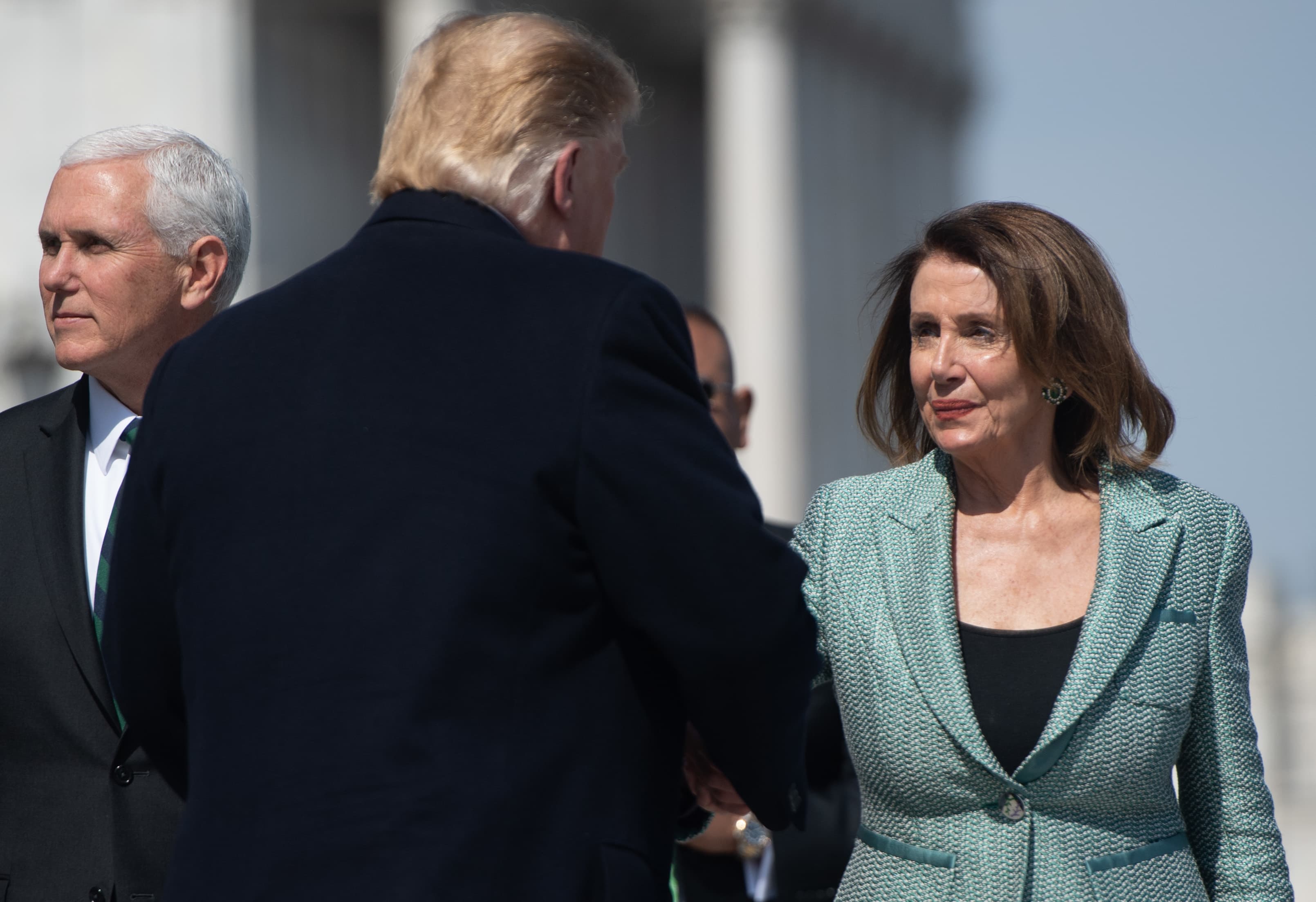
US President Donald Trump shakes hands with Speaker of the House Nancy Pelosi as he departs following the Friends of Ireland Luncheon in honor of Irish Prime Minister Leo Varadkar at the US Capitol in Washington, DC, March 14, 2019.

Saul Loeb | AFP | Getty Images

U.S. Trade Representative Robert Lighthizer sent a letter to congressional leaders on Thursday, kicking off the process of approving updates to the North American Free Trade Agreement.

According to a copy of a letter obtained by CNBC, Lighthizer submitted a draft so-called Statement of Administrative Action, which would allow the Trump administration to send the trade deal to Congress within 30 days. President Donald Trump wants to quickly follow through on his pledge to overhaul trade relations with Canada and Mexico, but Congress still stands in the way of ratifying the United States-Mexico-Canada Agreement. The White House wants to ratify the deal this summer.

The administration has put pressure on House Speaker Nancy Pelosi and Democrats to approve the trade agreement despite lingering concerns about the deal within the Democratic-held House. The speaker previously urged Lighthizer not to take the formal step to accelerate ratification until lawmakers had more time to iron out concerns with the White House, according to The Washington Post, which first reported the possibility of Trump making the move Thursday.

"The Trump Administration's decision to send Congress a draft statement of administrative action before we have finished working with U.S. Trade Representative Lighthizer to ensure the USMCA benefits American workers and farmers is not a positive step," Pelosi said in a statement Thursday. "It indicates a lack of knowledge on the part of the Administration on the policy and process to pass a trade agreement."

She added that Democrats "have been on a path" to voting "yes" on approving the deal, but said "it must be a path that leads to an agreement that delivers positive results for American workers and farmers."

The White House's decision to move forward more quickly than Democrats asked follows a tense meeting between the president and Democratic congressional leaders last week. Trump told Pelosi and Senate Minority Leader Chuck Schumer that he would not negotiate with them on legislation while House committees investigate him.

Democrats have raised several concerns about the agreement, including enforcement of labor and environmental protections and the deal's potential effect on drug prices.

As the administration pushes to approve the deal, Vice President Mike Pence met with Canadian Prime Minister Justin Trudeau on Thursday. While in Ottawa, the vice president promised the U.S. would "get the USMCA done this year."

Canada has cheered the Trump administration's decision earlier this month to lift tariffs on steel and aluminum imports from Canada and Mexico, which both countries opposed. Some Republicans in Congress had said they would not move forward with the agreement while the duties were in place.

Canada also took a formal step earlier this week to move toward ratifying the deal.

Subscribe to CNBC on YouTube.


Read More

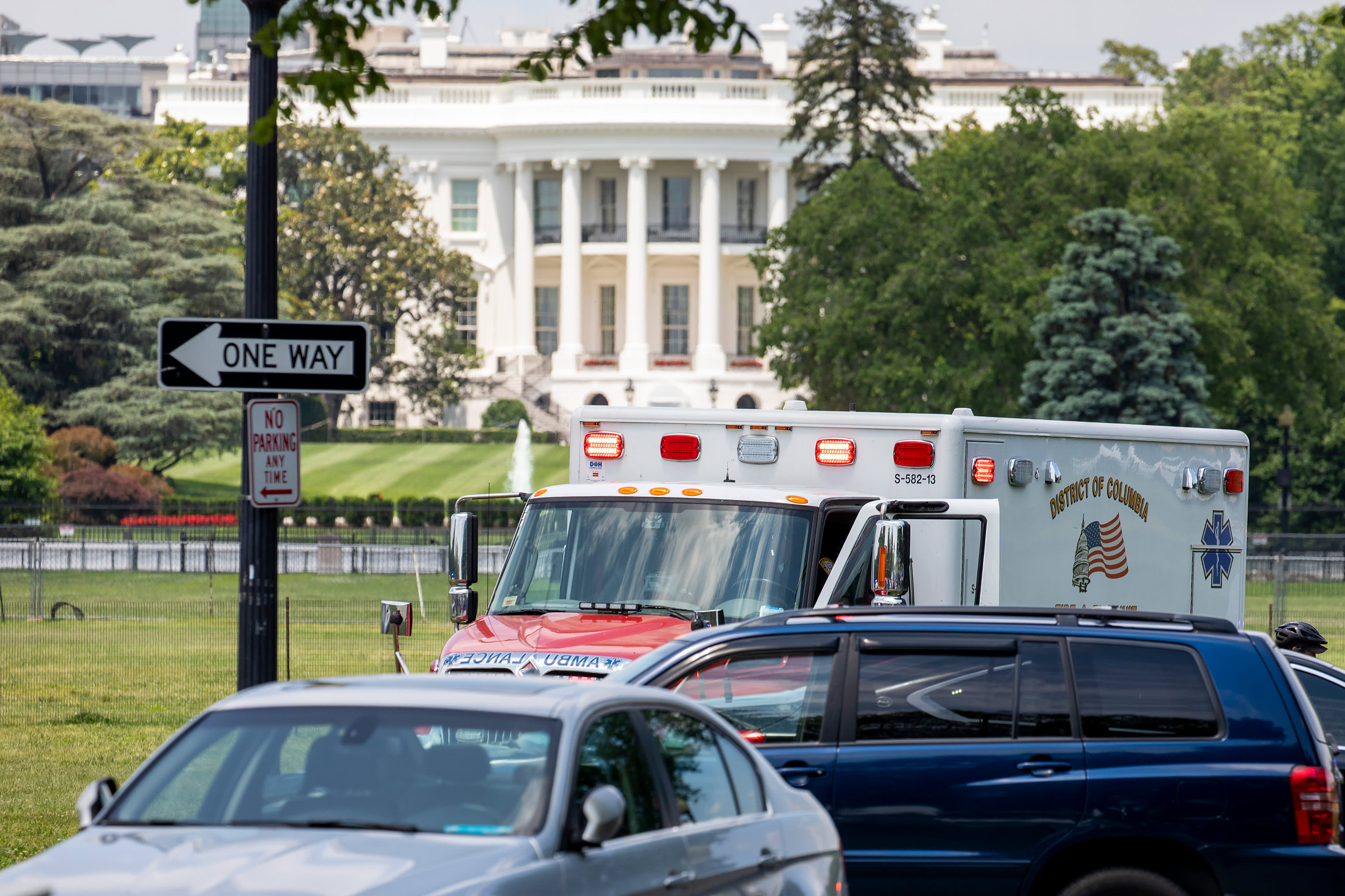
An unidentified man set himself on fire early Wednesday afternoon in front of sightseers on the Ellipse park in downtown Washington, D.C., not far from the White House, authorities said.

The man, identified Thursday as Arnav Gupta of Bethesda, Maryland, died of his injuries later Wednesday after being transported to a local hospital, U.S. park police said.

The Ellipse is a 52-acre park area that lies south of the White House and north of the National Mall, in the heart of Washington. The fire occurred just north of the Washington Monument.

Secret Service spokesman Jeffrey Adams said in a statement Wednesday that the agency's Uniformed Division Officers "responded in seconds" after the "male individual lit himself on fire." Officers then began administering first aid to the man.

"The individual is being transported to a local hospital," Adams added.

A spokesman for the Washington Fire Department told CNBC that, "I can confirm that we've transported one patient with burns from the Ellipse and we're now on the scene assisting law enforcement," referring to Park Police and U.S. Secret Service officers.

Several outlets reported that the man's injuries were life-threatening.

Alina Berzins, a 17-year-old recent high school graduate from Lorton, Virginia, told CNBC that she was visiting the National Mall with two of her cousins from Bolivia when "we saw this man" on the Ellipse and "he starts running, and then we saw him covered in flames."

"He started to walk" and then "cops started coming to the area and he collapsed," Berzins said. The fire then was extinguished, she said.

Berzins said that she and the other passersby in the area were stunned by the sight of the man.

"Everybody was in shock," Berzins said. "I was in shock."

Berzins' father posted on Twitter a video that his daughter took of the incident.

She said that several dozen law-enforcement officers flooded the scene and were joined by a helicopter overhead and multiple Fire Department vehicles.

A White House spokesman had no immediate comment.

The man's motive for setting himself on fire remains unclear.


Read More

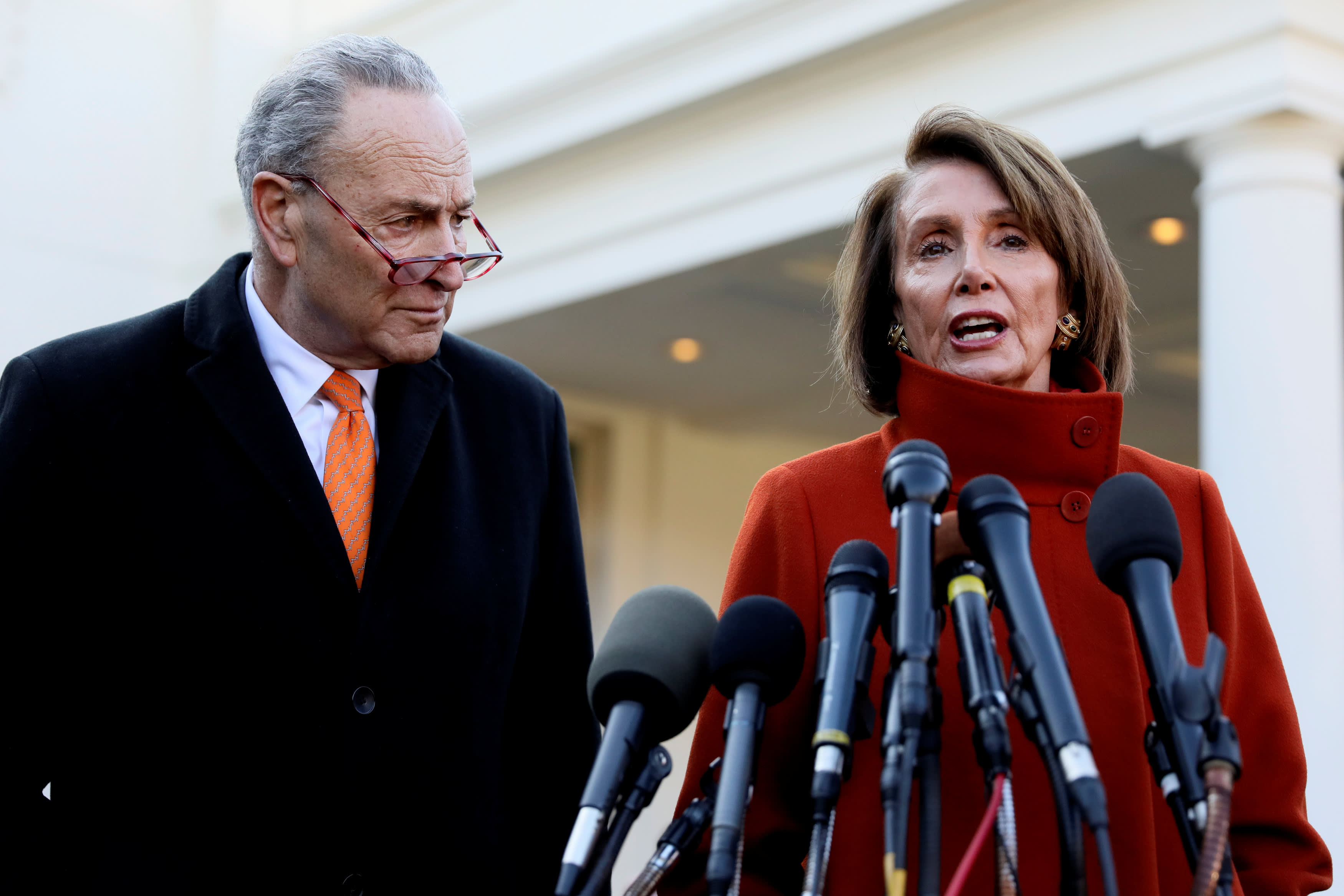
Senate Minority Leader Chuck Schumer (D-NY) and House Speaker designate Nancy Pelosi (D-CA) speak to reporters after meeting with U.S. President Donald Trump at the White House in Washington, U.S., December 11, 2018.

Jonathan Ernst | Reuters

Congress will soon vote on the United States' updated trade agreement with Mexico and Canada.

This much-needed update, called the United States-Mexico-Canada Agreement, is a sweeping trade deal that will create jobs, open up new markets for U.S. businesses of all sizes, and strengthen ties with two of America's most important allies.

House Speaker Nancy Pelosi and Senate Minority Leader Chuck Schumer are both smart legislators. They know the path to victory in 2020 runs through moderate districts. In the most recent midterm elections, my party flipped 40 House seats in Republican strongholds like Texas, Kansas, and Oklahoma by promising to advance policies that tangibly improve the lives of middle-class Americans.

USMCA is one such policy. Public support for the trade agreement has increased significantly since U.S., Canadian, and Mexican leaders finalized it last year. A new survey found Americans favor ratification of USMCA by a 4-to-1 margin.

The deal promotes a fair, rules-based trade environment that would help American workers flourish.

Consider how the pact would help farmers. USMCA eliminates some of the barriers that prevent American farmers from selling poultry, eggs, and dairy products in Canada. American farms already employ almost 3 million people. That number will grow if Congress ratifies the agreement and enables farmers to boost output and export more food to our northern neighbors.

House Speaker Nancy Pelosi and Senate Minority Leader Chuck Schumer are both smart legislators. They know the path to victory in 2020 runs through moderate districts.

Or consider how USMCA would boost wages for workers in the auto industry, which supports over 7 million U.S. jobs. To receive duty-free treatment under USMCA, 75 percent of a vehicle's value must originate in North America, up from the current 62.5-percent requirement under NAFTA. This change would create more jobs at auto-parts suppliers.

USMCA also requires nearly half of all car parts to be made by workers earning at least $16 an hour. That provision would ensure American manufacturing workers earn strong wages.

This deal has the strongest labor provisions of any U.S. trade agreement in history. It requires all three countries to protect labor rights recognized by the International Labor Organization. It also makes it easier for Mexican workers to form unions and collectively bargain. That'll help American workers by raising wages and benefits in Mexico -- thereby making it less attractive for U.S. companies to shift production and operations to our southern neighbor.

And USMCA would make it easier for America's 30 million small businesses to access the Canadian and Mexican markets. The deal reduces the regulatory and tax burden on certain American exports. For small e-commerce firms in particular, this could have a transformative effect on their business.

USMCA includes strong intellectual property protections that benefit workers in creative industries. For instance, the deal affords 70 years of copyright protection to books, movies, and music, which enables authors, actors, and artists -- and all the people they employ -- to reap the financial rewards of their original works.

And it prohibits customs duties on digital products like software. The deal also strengthens Canadian and Mexican intellectual property protections for advanced medicines invented in the United States, helping to level the playing field for U.S. innovators.

USMCA is a win for workers across North America. By building on the success of NAFTA, it will support the growth of current and future U.S. industries. Ratifying the pact would show voters across the country that Democrats prioritize the needs of hardworking Americans. That's a message that will resonate come 2020.

Howard Dean is the former Chair of the Democratic National Committee and Governor of Vermont.

For more insight from CNBC contributors, follow @CNBCopinion on Twitter.


Read More

Former US vice president Joe Biden speaks during his first campaign event as a candidate for US President at Teamsters Local 249 in Pittsburgh, Pennsylvania, April 29, 2019.

Saul Loeb | AFP | Getty Images

Former Vice President Joe Biden is preparing for his first fundraising tour of the San Francisco Bay Area as a 2020 presidential candidate, CNBC has learned.

Biden's allies on the West Coast are aiming to host several money-making events starting in late June and carrying on throughout the rest of the year. The fundraising tour is expected to stop in various locations across the region, including in San Francisco and Silicon Valley, according to people with direct knowledge of the matter. A fundraiser in nearby Sonoma is being planned for late 2019, these people noted.

Biden's aim of making inroads into the surrounding San Francisco area comes after his rivals have already made their own visits and gobbled up donors for themselves. San Francisco itself was a key fundraising block for Democrats throughout the 2018 congressional midterm elections as donors within the city combined to give more than $155 million to their causes, according to the nonpartisan Center for Responsive Politics.

While the venues have not been decided, organizers are looking to sell tickets at prices between $500 and $2,800, those close to the campaign said. During Biden's swing through Hollywood earlier this month, people familiar with the planning said they opened up the event to young entrepreneurs and allowed them access with a $500 donation. The campaign ended up raising more than $700,000 that day, CNBC first reported.

The Bay Area gatherings will likely take place at the homes of Biden's established supporters, rather than at hotels in the area, a source added. The campaign has yet to determine a fundraising goal for the West Coast tour.

Biden backers who are putting together the events include Wade Randlett, CEO of the transportation fuels division of General Biofuels; Steve Westly, founder of tech investment firm The Westly Group; and Denise Bauer, former U.S. ambassador to Belgium under former President Barack Obama. Westly's firm lists Tesla as part of its investment portfolio.

All three organizers were involved with bundling for Obama when he ran for president in 2008 and during his reelection bid in 2012. Each helped raise as much as $500,000 in both cycles, data from the Center for Responsive Politics shows.

A political spokesman for Westly confirmed his involvement in helping Biden's campaign in the Bay Area but declined to comment further.

"We are active with Biden's campaign," Westly's political director said. "Steve is working in a major way for them to help fund raise. Everything is still being finalized."

Randlett, Bauer and a spokesperson for Biden did not return requests for comment.

South Bend, Indiana, Mayor Pete Buttigieg held a fundraiser at The Regency Ballroom in San Francisco earlier this month for $25 a ticket. Sen. Kamala Harris, D-Calif, visited the area in February for an event at the Delancey Street Foundation, a nonprofit that provides rehab services for convicted criminals and former addicts.

For Biden, the trip to California follows a similar fundraising blitz on the other side of the country in New York City. He's set to attend at least two fundraisers starting June 17, CNBC first reported. Short seller Jim Chanos is also slated to be there. Politico reported Biden's campaign collected $2.2 million while recently fundraising in Florida.


Read More

U.S. District Judge Edgardo Ramos (L) is shown in this court room sketch during a hearing where he ruled that Deutsche Bank AG and Capital One Financial Corp must comply with subpoenas issued to them by two U.S. House of Representatives committees to provide financial records to lawmakers investigating U.S. President Donald Trump's businesses, in Manhattan Federal Court in New York City, U.S. May 22, 2019.

Jane Rosenberg | Reuters

President Donald Trump, his businesses and members of his family on Friday appealed a federal judge's decision that Deutsche Bank and Capital One can turn over years of financial records relating to the president.

On Wednesday, U.S. District Court Judge Edgardo Ramos said that the two banks can comply with the subpoenas issued by the Democrat-led House Intelligence and Financial Services committees for a broad range of financial information. Trump and three of his children — Donald Jr., Trump and Eric — had sued to block the subpoenas, arguing that they had no "legitimate legislative purpose" and that they were intended to dig up dirt to damage the president politically.

A lawyer for Trump told Ramos in federal court in Manhattan on Wednesday that an appeal was "probably a safe bet."

Attorneys for Trump did not immediately respond to CNBC's request for a statement on their appeal.

The move marks the second time Trump has sought to overturn a judge's decision that would force the disclosure of his financial records. On Monday, a judge in Washington, D.C., federal court ruled that Mazars, the president's accounting firm, had to turn over such records in response to another subpoena from House Democrats. Trump appealed that ruling the following day.

In both cases, the judges rejected outright each of the arguments put forward to block the subpoenas from House Democrats. The judges outlined broad subpoena powers for Congress, set a low bar for committees establishing a "legislative purpose" when issuing subpoenas, and dismissed the notion that the judiciary should be responsible for evaluating Congress' political motives.

In the Mazars ruling, Judge Amit Mehta wrote that "so long as Congress investigates on a subject matter on which 'legislation could be had,'" then Congress is acting within the bounds of the U.S. Constitution.

Shortly after the ruling, Trump slammed Mehta for making "totally the wrong decision," and noted that Mehta is an "Obama-appointed judge."

Ramos said when delivering his ruling from the bench in court Wednesday that while the Democrats' subpoenas are "undeniably broad," they are "clearly pertinent."

Ramos was also appointed by President Barack Obama.

Neither bank in that case had tried to thwart the subpoenas. After the ruling, Deutsche Bank spokeswoman Kerrie McHugh said: "We remain committed to providing appropriate information to all authorized investigations and will abide by a court order regarding such investigations." The spokeswoman offered the same statement Friday in response to CNBC's request for comment on the notice of appeal.

Capital One did not respond to a request for comment.

Trump has vowed to fight "all the subpoenas" related to him that have been issued by House Democrats since they took control of congressional committees after the November midterm elections.

More of the subpoena battles could be headed to court. Treasury Secretary Steven Mnuchin last week defied subpoenas from the House Ways and Means Committee to hand over six years of Trump's personal and business tax returns. Mnuchin's justification for refusal relied in part on the same arguments made in the two cases that went against Trump this week.

Ways and Means Chairman Richard Neal, D-Mass., signaled last Friday that he would seek to resolve the matter in court.

The president has accused Democrats of seeking a "do-over" after the public release of a redacted version of special counsel Robert Mueller's Russia report, which found insufficient evidence to show a conspiracy between the Kremlin and the Trump campaign and did not make a decision on whether or not Trump himself obstructed justice.

Democrats have fired back, claiming that they have a responsibility to conduct oversight into the president and that there are legitimate reasons to seek the information being requested.

The already fractious and polarized dynamic between the two camps on Capitol Hill intensified this week, when Trump abruptly walked out of a bipartisan infrastructure meeting with House Speaker Nancy Pelosi, D-Calif., and Senate Minority Leader Chuck Schumer, D-N.Y., after Pelosi accused Trump of attempting a "cover-up."

Trump then held a fiery solo news conference in the Rose Garden, lambasting the Democrats and admonishing them to "get these phony investigations over with " before any political negotiations can resume.

-- CNBC's Brian Schwartz and Dan Mangan contributed to this report.


Read More

Contact Form

Name

Email *

Message *

Powered by Blogger.
Javascript DisablePlease Enable Javascript To See All Widget